On June 7, World Food Safety Day will be celebrated. It was established by the United Nations in 2018 with the aim of raising awareness among institutions, businesses, and consumers about the importance of ensuring safe food throughout the entire production chain.
According to data from the World Health Organization, around 600 million people worldwide fall ill each year due to contaminated food, and more than 420,000 die from foodborne diseases. It is also estimated that there are more than 200 diseases linked to the consumption of unsafe food, with an economic impact exceeding 110 billion dollars in low- and middle-income countries.
Food safety does not only concern the quality of the final product, but encompasses the entire journey “from farm to table”: control of raw materials, traceability, proper storage, transportation, processing, and transparent information for consumers. In this context, the issue takes on an even more strategic value for the Italian agri-food sector, long a symbol of excellence, authenticity, and gastronomic culture worldwide.
In recent years, the growing spread of the phenomenon known as Italian Sounding has made the protection of authentically Italian products even more important. Products that evoke Italian names, colors, and traditions without having Italian origin or quality risk undermining consumer trust and penalizing companies that comply with production and health standards.
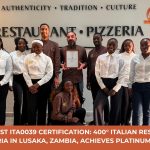
It is precisely in this context that the value of ITA0039 by ASACERT fits in, the certification system created to promote and protect the authenticity of Italian cuisine worldwide. Through checks on product conformity and controls along the supply chain, ITA0039 helps enhance the use of genuinely Italian ingredients, supporting transparency, food safety, and quality.
The commitment of ITA0039 is not limited to certification, but also translates into awareness-raising activities and the promotion of the culture of authentic Made in Italy.
On the occasion of World Food Safety Day, it therefore becomes essential to reaffirm how certification, traceability, and awareness represent key elements in building a safer, more sustainable, and more transparent food system. Because protecting food safety means not only safeguarding people’s health, but also preserving the value and credibility of true Made in Italy worldwide.